
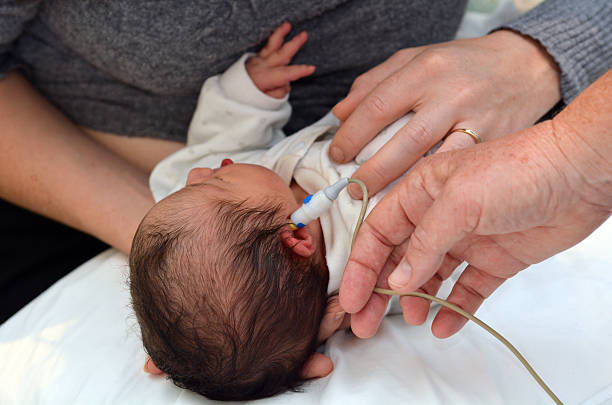
Republic Act No. 9709, also known as the Universal Newborn Hearing Screening and Intervention Act of 2009, ensures that parents or legal guardians of infants born in hospitals are informed by health practitioners that their child must undergo a hearing screening test and other necessary actions for early intervention of hearing loss.
So, what are the benefits of your child getting an early screen and why is immediate intervention necessary? Why is the Republic Act no. 9709 essential?
Importance of Addressing Hearing Loss Early
How it impacts a child’s development and participation in society
There could be many possible causes for why a newborn may have hearing loss such as birth defects in the ear structure, genetic disorders, exposure to chemicals or medicine while in the womb and many more (Hearing Loss - Infants: MedlinePlus Medical Encyclopedia, n.d.).
Some of the red flags that may indicate that an infant has hearing loss is when a baby:
1. Is not startled by loud noises
2. Shows no reaction when they are being talked to by familiar voices
3. Has a delay in saying their first words (which usually happens around 10-14 months)
4. In older children, a very big sign would be they are falling behind in school and are having a hard time interacting with other children
These signs show the impact of hearing loss on children because interacting with others is how they learn. It also further highlights the importance of R.A. 9709 because it ensures that all newborns have access to hearing loss screenings and develops a public policy in early hearing detection and intervention (Universal Newborn Hearing Screening and Intervention Act of 2009, 2009). Early action will help reduce the risk of a child born with hearing loss to experience developmental delays and give them a better quality of life through participation in social interactions.
However, the implementation of the republic act still needs further improvement, especially when it comes to certain areas.
What is Yet to Come of R.A. 9709 in the Philippines
According to a survey conducted by Labra et al. in 2023 that looked into the implementation of R.A. 9709, the registered newborn hearing centers in the Philippines were found to be compliant to the protocols set by hearing specialists and the staff conducting procedures were certified, and a majority of the centers could contact parents of infants who were found to have some degree of hearing loss. However, there was a lack of tracking the outcomes, offering of confirmatory services, and access to early intervention services such as hearing device acquisition and habilitation/therapy.
In the republic act itself, all hospitals and centers that conduct newborn hearing screening shall submit copies of the patient results in order to consolidate a database of all the children tested, while there is also a separate registry for infants that were found to have hearing loss (Universal Newborn Hearing Screening and Intervention Act of 2009, 2009).
The delays in submitting reports may cause the lack of tracking outcomes and offering parents access to early intervention options. Moreover, it is also possible that parents may be overwhelmed by the information given to them and the cost of availing services in the country, which will ultimately delay the process of giving intervention.
Addressing the lapses in the update of the registry could be a first line of action for helping the overall implementation of this republic act in the Philippines. Ensuring also that every guardian and child has access to early intervention services, especially in regions outside of industrial cities, is another beneficial step toward the overall improvement of the quality of life that Filipinos fundamentally deserve. R.A. 9079 ensures that no child gets left behind in the momentum of the country's progress, and they may also become participating members of society.
References
Hearing loss - infants: MedlinePlus Medical Encyclopedia. (n.d.). Medlineplus.gov. https://medlineplus.gov/ency/article/007322.htm
Labra, P. J., Mejia, O. A., Ricalde, R., Ombao, J. C., Pamela, A., Ambrocio, G. M., Capistrano, M., & Eugenio, N. (2023). Implementation of Universal Newborn Hearing Screening in the Philippines: A Survey of Registered Newborn Hearing Centers. Acta Medica Philippina, 57(9). https://doi.org/10.47895/amp.v57i9.4342
Universal newborn hearing screening and intervention act of 2009, (2009). https://lawphil.net/statutes/repacts/ra2009/ra_9709_2009.html