
Listening&spokenlanguagehabilitation.
Supporting families and professionals with curated resources for auditory verbal therapy and rehabilitation.
Hearingisthefirststep.Listeningiswhatchangeslives.
Devices restore access to sound. Structured habilitation is what turns sound into language, learning, and connection.
Setting expectations with the family, building auditory readiness, and aligning with the surgical and audiology team — so day one with a device isn't day one of the journey.
The months right after activation are when the auditory brain learns fastest. Consistent, structured listening practice makes all the difference.
Long-term outcomes depend on the team around the child: parents, classroom teachers, SLPs, and audiologists.
Inquire about Habilitation
To know more about rehabilitation and Auditory Verbal Therapy, please email our team.
For professionals who want to know more about rehabilitation and auditory verbal therapy, we also encourage you to get in touch.
Rehabilitationresourcesforfamilies
Click through to trusted libraries from Cochlear and ASHA — opens in a new tab.
General Rehabilitation Resources
Cochlear's full library of rehabilitation guides, exercises, and family resources for users of every age.
Child Audiologic Habilitation
Comprehensive guide on habilitation services for infants and toddlers with hearing loss.
Child Aural Rehabilitation
Strategies and therapies for older children to improve listening and communication skills.
Trends in Amplification Journal
Aural Rehabilitation for Children.
Latest from our team
Sound Advice: Addressing Hearing Loss to Reduce Dementia Risk
This is a significant concern, as dementia is primarily used as an umbrella term for several diseases that affect important brain functions that are necessary in daily living such as memory, planning, and communication. The World Health Organization (2025), defines dementia as a syndrome that is not part of normal, healthy aging as it damages nerve and brain cells. These physical changes can cause symptoms such as forgetting information and misplacing objects, as well as affecting a person's behavior or personality (such as, withdrawing from social interactions). Symptoms worsen with age and a person with dementia's capacity to live independently is decreased. It may progress to a point where a person with dementia may be completely dependent on other people's care as they experience severe effects of dementia such as increased agitation due to growing confusion and loss of bladder and bowel control (World Health Organization, 2025). These statistics reflect that hearing loss is an ongoing critical public health issue in this country that heavily impacts all those affected by it. Given also its links to the possible development of dementia, it is essential to address it. According to a recent study by world-leading researchers in linking hearing loss and dementia, Dr. Alison Huang and Dr. Frank Lin (2024) present a hypothesis on how hearing loss contributes to the gradual loss of mental functions like processing speed, thinking, and memory. Mainly, their three suggested reasons why hearing loss can contribute to the development of dementia include: 1. More Cognitive Load (or Mental Overload) - When an individual experiences hearing loss, the sound signals received are poor, which will then trigger the brain to use more cognitive or mental resources to put more effort into understanding sounds. This leaves little mental energy left to process other mental functions like working memory. 2. Changes Brain Structure - As seen in brain scans, severe hearing loss can physically change the brain. When a person cannot hear, the parts of the brain that are in charge of hearing become inactive. Similar to an unused muscle, the brain and its pathways begin to shrink and eventually die from a lack of auditory stimulation. Most importantly, these areas for hearing are also the ones responsible for speech, memory, and understanding. 3. Increased Social Isolation - As previously mentioned, areas that are in charge of hearing are connected to other communication functions such as speech and understanding. Thus, hearing loss negatively impacts the quantity and quality of social interactions that individuals who experience the condition have on a daily basis. As Huang and Lin (2024) noted, social isolation can harm brain function because it may cause changes in behavior, stress, and body inflammation, all of which may lead to a decline in brain health.While these mechanisms explain the direct link, hearing loss rarely operates in isolation. Instead, it frequently interacts with other common risk factors such as advancing age, chronic health conditions like diabetes and hypertension, and socioeconomic factors like educational attainment. Together, these factors could accelerate brain health decline which increases the overall risk of developing dementia. Hearing loss is a risk factor that may be addressed before it can contribute to possible development of dementia. Given the recent leaps and bounds achieved through modern technology, there are devices that can fit an individual's certain hearing needs which can help with better participation within society. However, it seems that the accessibility of both the hearing devices and the knowledge of how hearing loss and dementia are connected have not caught up to the advancements in technology. Huang and Lin (2024) acknowledged in their paper that there is still a need for multidisciplinary efforts within the medical field, public policy, and public health sector to advance hearing care. This is especially evident within the Philippine context where the culture typically accepts disruptive hearing loss and memory decline as a part of the normal aging process, when it is not. People must advocate for further better quality of life, even for those who have hearing loss and who are aging. Awareness needs to be raised and education regarding the health impacts of hearing loss must be further spread. There must be efforts in reducing the hearing loss severity, especially through modifiable means such as reducing ear infections and limiting noise exposure. Lastly, both public and private sectors should advocate quality and affordable hearing devices and hearing care within the country. No one should be left behind, particularly in the face of a public health crisis. Combined efforts can ultimately transform hearing loss as an overlooked barrier of healthy, normal aging into a modifiable risk. Ultimately, raising awareness and advocating for early intervention and universal health coverage ensures that hearing care is not a privilege, but a fundamental right for every person.
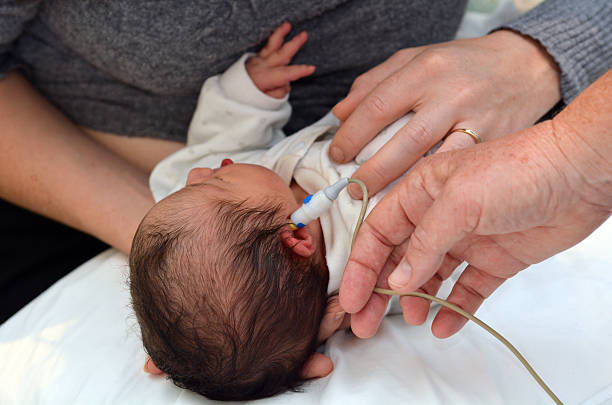
RA 9709: Why is Early Hearing Loss Intervention Important for Infants?
Republic Act No. 9709, also known as the Universal Newborn Hearing Screening and Intervention Act of 2009, ensures that parents or legal guardians of infants born in hospitals are informed by health practitioners that their child must undergo a hearing screening test and other necessary actions for early intervention of hearing loss.So, what are the benefits of your child getting an early screen and why is immediate intervention necessary? Why is the Republic Act no. 9709 essential? There could be many possible causes for why a newborn may have hearing loss such as birth defects in the ear structure, genetic disorders, exposure to chemicals or medicine while in the womb and many more (Hearing Loss - Infants: MedlinePlus Medical Encyclopedia, n.d.). Some of the red flags that may indicate that an infant has hearing loss is when a baby: 1. Is not startled by loud noises2. Shows no reaction when they are being talked to by familiar voices3. Has a delay in saying their first words (which usually happens around 10-14 months)4. In older children, a very big sign would be they are falling behind in school and are having a hard time interacting with other childrenThese signs show the impact of hearing loss on children because interacting with others is how they learn. It also further highlights the importance of R.A. 9709 because it ensures that all newborns have access to hearing loss screenings and develops a public policy in early hearing detection and intervention (Universal Newborn Hearing Screening and Intervention Act of 2009, 2009). Early action will help reduce the risk of a child born with hearing loss to experience developmental delays and give them a better quality of life through participation in social interactions.However, the implementation of the republic act still needs further improvement, especially when it comes to certain areas. According to a survey conducted by Labra et al. in 2023 that looked into the implementation of R.A. 9709, the registered newborn hearing centers in the Philippines were found to be compliant to the protocols set by hearing specialists and the staff conducting procedures were certified, and a majority of the centers could contact parents of infants who were found to have some degree of hearing loss. However, there was a lack of tracking the outcomes, offering of confirmatory services, and access to early intervention services such as hearing device acquisition and habilitation/therapy.In the republic act itself, all hospitals and centers that conduct newborn hearing screening shall submit copies of the patient results in order to consolidate a database of all the children tested, while there is also a separate registry for infants that were found to have hearing loss (Universal Newborn Hearing Screening and Intervention Act of 2009, 2009).The delays in submitting reports may cause the lack of tracking outcomes and offering parents access to early intervention options. Moreover, it is also possible that parents may be overwhelmed by the information given to them and the cost of availing services in the country, which will ultimately delay the process of giving intervention.Addressing the lapses in the update of the registry could be a first line of action for helping the overall implementation of this republic act in the Philippines. Ensuring also that every guardian and child has access to early intervention services, especially in regions outside of industrial cities, is another beneficial step toward the overall improvement of the quality of life that Filipinos fundamentally deserve. R.A. 9079 ensures that no child gets left behind in the momentum of the country's progress, and they may also become participating members of society.
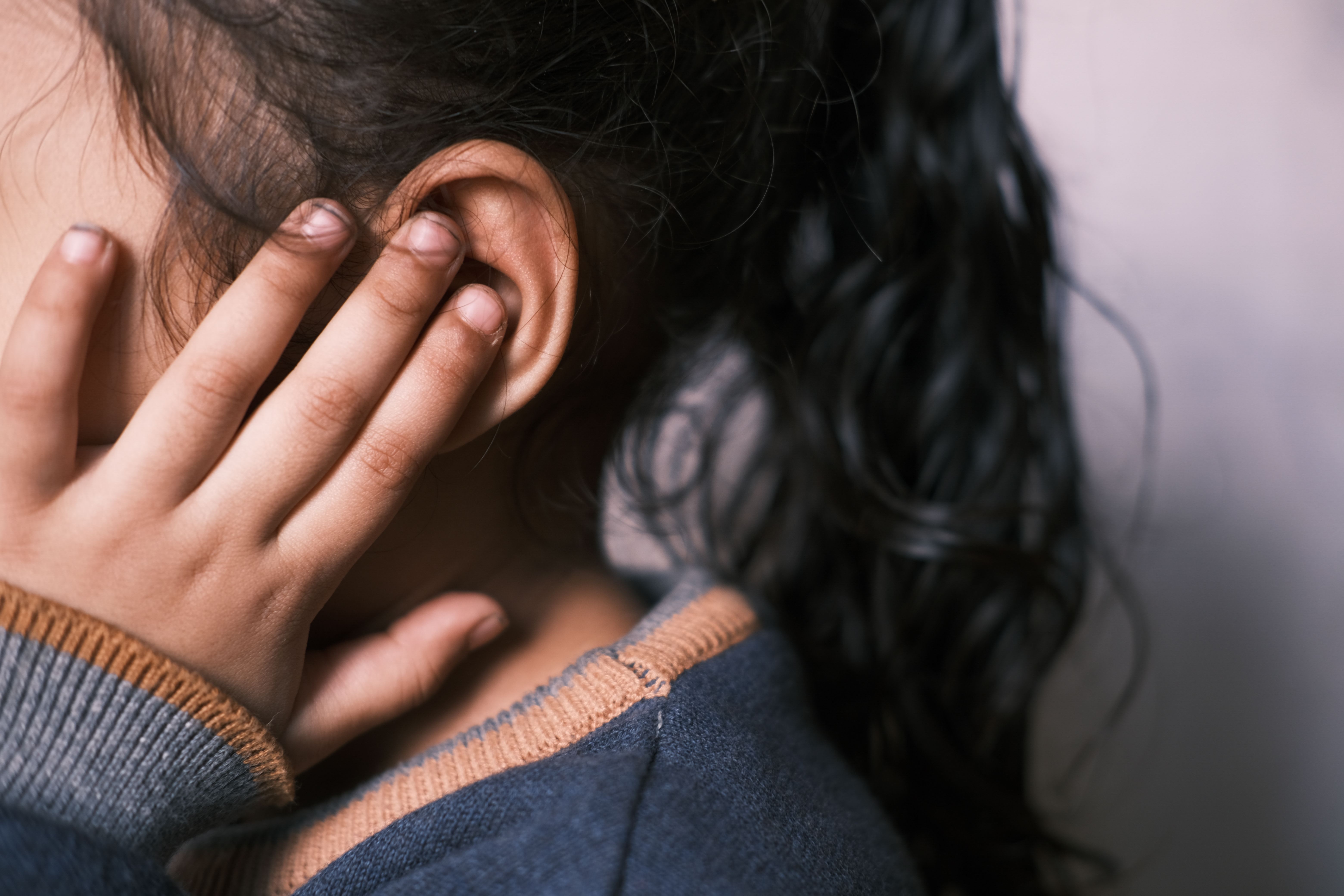
Getting A Hearing Aid is Step One, But What's Next for my Child?
Humans, through years of evolution, are inherently social creatures. This is why social interactions are very important for children to learn because hearing sounds help them understand important information to navigate through life.But during the 2026 World Hearing Day forum, Dr. Carlene Hipol, an Ear, Nose, and Throat (ENT) specialist and audiologist from the Baguio General Hospital and Medical Center, said that hearing loss affects 7.5% of children under 18 in the Philippines (Dar, 2026). That number makes it evident that hearing loss is currently impacting many Filipino children, especially when it comes to their ability to make friends, talk, learn, and be self-confident (Effects of Hearing Loss on Development, 2009).Although, with early intervention, the effects of hearing loss can be managed. Acquiring an assistive hearing device for your child is just the first step, but what's next? Nurturing a child's hearing development is essential so that they may be able to participate and navigate their way in society, which is why early intervention and habilitation is crucial for their development. But, what does early intervention and habilitation entail?Early intervention is necessary because children's brains are rapidly developing. Early intervention may help children avoid missing key points of speech and language development. These important developmental milestones allow children to make friends and to learn new information.Early intervention includes: Getting your child's hearing tested, asking a specialist such as an audiologist regarding the best action to help with your child's hearing loss, and possibly acquiring an assistive hearing device such as hearing aids and cochlear implants. However, the devices mentioned only provide your child access to sound, but it does not automatically mean your child may develop their speech or language skills. This is where hearing habilitation is needed.Hearing Habilitation or therapy allows children or babies to learn important communication skills (e.g., speech, language, listening). It also helps with training both the child and their guardian about the maintenance and use of their hearing device. There are multiple different therapy approaches that may be done to ensure that a child with hearing loss may have their specific communication needs met. Certified professionals such as speech and language therapists and auditory-verbal practitioners may help determine what would be the best course of actions for your child's habilitation needs. There are many examples, but here are a few:Speech-Language therapy sessions help improve a child's speech, language, and literacy (reading and writing) skills. It uses any means such as visual cues and listening cues to help the child understand what is being learned. Parents are not necessarily active in this approach, but may still be coached by speech-language pathology therapists (SLPs).Meanwhile, auditory-verbal therapy (AVT) makes use of the child’s residual and aided hearing to learn to listen and speak. It is an approach that heavily emphasizes learning spoken language through listening only. It is done by certified practitioners that follow principles of auditory-verbal therapists which heavily advocate for early intervention and guardian or parent coaching. It is often a play-based approach. Play is a very important activity for children because it is their main occupation and also their way of learning.There is also the auditory-oral approach which, unlike AVT, allows for helpful visual support alongside learning spoken language through solely hearing. Lip-reading, natural gestures, and other bodily expressions may be used alongside listening to help the child learn.Another example would be cued speech. It is a visual form of spoken language wherein users of this sign language system use different signs for sounds within words rather than the words and concepts themselves. It uses certain hand shapes and also mouth movements, making it an aid for possible lip-reading. In the end, these therapy approaches work differently for every child, because every child's needs are different. Hearing devices may give access to sounds, but with added habilitation, more doors may open to improve a child's quality of life. More efforts in all fronts such as in public policy and within the habilitation field should be done to ensure accessibility to these services. A society that prioritizes the welfare of children produces a more inclusive and sustainable environment for all.